Last updated 11.11.2025
People attend stadium events to watch live matches and concerts. These venues deliver the buzz of live crowds, energetic chants, and cheers, creating an electric vibe you cannot get from home. Plus, it adds a social touch to the experience by allowing you to hang out with fellow fans and friends.
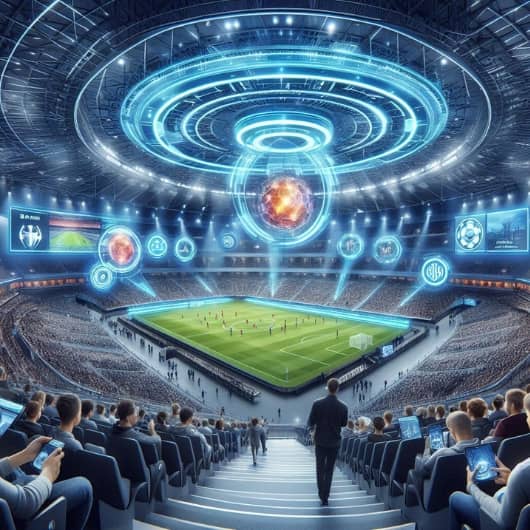
However, walk into any modern stadium today to realize that things are changing quickly. Technology is creeping into modern sports venues to enhance fan experiences and generate new revenue opportunities. This article covers how smart stadiums are transforming experiences, whether you’re into live concerts or sports.
10 minute read ⏰
What Are Smart Stadiums?
Let’s start by having a clear understanding of what smart stadiums are. In a nutshell, these are sports and concert venues that use digital systems and tools to enrich fan experiences. They leverage modern technologies like AI, camera sensors, and high-speed internet to heighten operational efficiency and entertainment. Smart stadiums provide more than just free Wi-Fi.
Technologies and Innovations Behind the Rise of Smart Stadium
Without wasting time, let’s discuss the technologies that are running modern stadiums:
Wi-Fi and 5G Internet Network
You may be forgiven for thinking that all stadiums worldwide offer free internet connection. After all, we’ve become so accustomed to free internet in public spaces these days. However, this technology is only beginning to make its way into stadiums. Popular venues around the world are now racing against time to install high-speed internet and enhance fan experiences.
Old Trafford, the home of Premier League giants Manchester United, is an example. This famous venue only started offering free Wi-Fi during the 2023/24 season. According to an official statement, this technology will improve fan connectivity during matchdays. More than 1,600 access points were installed, the largest connectivity in the UK. Expect more venues to follow suit.
So, why are famous stadiums rushing to install free Wi-Fi? Below are a few benefits for the fans:
- Social Media Sharing: Fans can share their experiences and real-time matchday photos and videos with their online friends and followers.
- Seamless Connectivity: You can use stadium Wi-Fi to enjoy uninterrupted browsing, streaming, and calling when mobile data becomes slow.
- Quick Navigation: If it’s your first time at these complex venues, you can use this free internet to find your way easily.
- Convenience: Installing free Wi-Fi allows fans to enjoy convenient services like mobile ticketing and contactless payments. This reduces the long queues on matchdays.
Hyper-Personalization with AI Technology
The AI technology became popular only recently after the launch of ChatGPT in 2022. However, this technology is already sweeping across different sectors, including entertainment. Today, some stadiums are already using AI to analyse fan data and provide personalized experiences. As a result, some of these venues have experienced high fan satisfaction scores.
Mercedes-Benz Stadium in Atlanta, Georgia, is popular for being one of the most technologically advanced venues. This stadium uses AI technology to make staff and guests feel like they are in a friend’s house. Its AI concierge uses customers’ location data and purchase history to send personalized recommendations via mobile.
Expect to receive more real-time updates about services like merchandise discounts and seat upgrades from your team. AI remembers all your historical orders and purchases, which allows it to suggest quick reorders with zero wait times. The result is a more solid connection between the fans and the brand.
Facial Authentication for Seamless Stadium Entry
Facial recognition is another technology that’s revolutionizing fan experiences at stadiums. This technology can significantly reduce stadium entry times by linking fans’ tickets to their face. Once inside, fans can use it to enjoy frictionless payments and easily access age-restricted areas. Let’s just say it minimizes queues while enhancing security.
Again, the Mercedes-Benz Stadium of the Atlanta Falcons is a good reference point. This venue uses a facial authentication technology powered by Wicket to allow fans to link their ticket accounts with a mere selfie. This leads to faster access into the venue, where you can use it to make facial payments. It also minimizes the risk of lost IDs and misused credentials.
Karl Pierburg, the Chief Technology Officer of the Falcons, was visibly excited by this technology. He said that the whole idea is to ensure that the fans don’t break stride during matchday. Pierburg noted that this innovation allows you to move from your car to your seat and order a hot dog without stopping anywhere. That’s the type of convenience that modern fans crave.
Improved Audio Experience
While this may not seem like a big deal, modern stadiums are rushing to overhaul or improve their audio systems. These systems are designed to enhance the fan experience by providing clear and consistent sound for music and announcements. They can easily overcome noise challenges and deliver a more immersive atmosphere.
Before the start of the 2025/26 EPL season, it was announced that referees would make in-stadium announcements after VAR decisions. Evidently, the objective is to make the game more transparent when making crucial decisions. This new development places more pressure on football clubs in the league to invest in high-quality audio systems.
Tottenham Hotspur Stadium, which was opened in 2019, currently boasts a complete surround sound system from JBL. According to the American company, this venue has 156 two-way full-range loudspeakers, 54 subwoofers, and 196 all-weather loudspeakers. JBL also installed more than 140 amplifiers. Now that’s a beefed-up sound system!
AR and VR Technologies for More Immersion
AR and VR technologies are no longer a special reserve for video gamers. These revolutionary technologies are quickly making their way into big stadiums to provide more immersive experiences. In the US, several NFL clubs have inked deals with AR/VR companies to pave the way for increased fan engagement.
For instance, LA Rams partners with 8i to allow fans to enjoy virtual experiences using the stadium’s app. This app allows access to AR content, such as interactive play diagrams and player locker rooms. The American franchise also has a deal with ARound to integrate AR effects into its live broadcasts on Infinity Screen. This innovation blends live moments with dynamic AR content.
English League One side, Bradford City AFC, does it even better by providing an interactive stadium experience. This club provides a 360-degree VR tour of its digital ticket booth and merchandise shop. Fans and visitors can also enjoy high-resolution visuals of the football pitch and seating options in the stands. These technologies highlight the new era of sports entertainment.
SMPTE 2110: Transforming Broadcasting Workflows
The SMPTE 2110 protocol is the silent MVP inside most stadiums if you understand tech lingo. This technology is the brain behind the giant LED screens, smooth displays, and quiet control rooms. It’s a data transmission standard that provides a consistent bitrate to enhance content broadcasting. 2110 allows IP-based routing of uncompressed audio, video, and metadata.
So, how does SMPTE 2110 impact fan experience? Most fans, whether in football, hockey, or basketball, won’t know they are watching a game powered by this technology. SMPTE 2110 allows the production team to capture more camera angles with fewer cables. They can deploy additional wireless or robotic cameras throughout the stadium.
2110 also allows fans across the stadium to enjoy richer displays. Think about it as the ultra-slow-motion moments with super zoom shown within milliseconds of play. Moreover, it powers the crisper and cleaner graphics or scoreboards and screens in the stadium. All in all, SMPTE 2110 makes the fan experience feel smoother and more immersive.
OT and IoT Cybersecurity for Stadiums
With almost all the stadium services going digital, it’s unsurprising that owners are investing heavily in security measures. Modern venues rely on thousands of IoT and OT systems to ensure maximum safety and efficiency. Remember, most governments have designated these venues as critical infrastructure. In the US, they are under the oversight of the CISA.
The largest stadiums in the world operated like interconnected microcities. It all starts at the gates, where you can find CCTVs, IP cameras, and ticketing kiosks. The inside is filled with more internet-connected cameras, drones, public address systems, and light control systems. This complex network can be subject to cyberattacks if not carefully protected.
Fortunately, modern stadium systems are all protected by firewalls and industry-grade data encryption protocols like SSL and TLS. In addition, these venues use a network segmentation approach. This can isolate the different types of network traffic, including fan and operational data. The point is to prevent threats from spreading to other networks in case of a breach.
Other cybersecurity measures that stadiums take to protect fans include:
- Using AI to quickly identify unusual patterns and respond to threats before they become a full-blown cyber breach.
- Zero-trust network architecture that requires continuous verification of all users and devices before granting access.
- AI-powered HD surveillance cameras with advanced object detection and facial recognition capabilities.
- Use of biometric data to identify fans and restrict physical access to protected areas in the stadium.
- Deploying AI-powered drones to detect overcrowding and identify abnormal behaviours like area access and fights.
The Bottom Line
Smart stadium innovations are no longer enhancements – these technologies are real expectations from the fans. Innovations like frictionless Wi-Fi and biometric authentication are gradually becoming a mainstay at most entertainment venues. These technologies and many more heighten fan experience and help stadium operators unlock maximum revenue streams. Let’s hope your local team’s stadium is ready to join the digital movement.